Featuring Grayson Vacc of Masculinity Made Coaching
January brings a lot of pressure around changing our bodies—but for many trans masculine people, this season is less about becoming someone new and more about becoming more ourselves.
We also know that transition doesn’t always mean medical transition. Transition can look like social shifts, emotional work, community connection, movement, exploration, or medical care—any combination, or none at all. Every path is valid.
For many trans masc folks, movement becomes a grounding form of gender affirmation. Not to chase an ideal, but to build confidence, connection, and trust in one’s body.
This month we’re highlighting Grayson Vacc, ISSA/NCCPT Certified Personal Trainer and founder of Masculinity Made Coaching (MM)—a coach who has helped over 1,000 LGBTQ+ people build confidence and embodied self-trust through fitness.
About Grayson
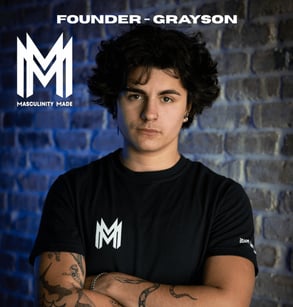 “My name is Grayson, and I’m a trans personal trainer, educator, and founder of Masculinity Made. I started my fitness journey many years ago, before I even knew I was trans. Fitness became my first form of gender-affirming care. It helped me build a body I felt more comfortable in—pre-T, pre-top surgery, even before coming out.
So if you’re feeling stuck or hopeless on your journey right now… I get it. That is the exact reason why I do what I do. To make this type of gender-affirming care more known and accessible.
My goal now is to share the insights and tools I’ve learned throughout the years to help LGBTQ+ individuals build themselves up the same way I did. My coaching philosophy blends evidence-based training with identity work, teaching clients how to use fitness as a catalyst for personal evolution.
I’ve helped over 1,000 people build confidence in their queer identity through fitness—and I’m excited to share some of that knowledge with you today.”
Explore MM:
- https://masculinitymade.fit/
- https://masculinitymade.com/welcome
- Instagram: @masculinitymade / @gray_vacc
Q&A with Grayson
"What’s something you wish more trans masc people knew about connecting to their bodies?"
Grayson: I really like this question because my take on it has changed a lot over the years. A few years ago, my answer would’ve sounded something like this:
“Fitness is a great way to build a body that better aligns with how you feel on the inside. A stronger back, broader shoulders, or a more sculpted chest can ease dysphoria day by day.”
And while that’s still true, I’ve realized it barely scratches the surface of what fitness can mean in someone’s gender journey.
Metric- and aesthetic-based goals have a place, but the deepest growth happens when you start building trust with yourself. That trust comes from repetition—showing up for yourself even on the days you don’t want to. For me, that’s where the real confidence came from, and honestly the most euphoric part of transitioning.
Sometimes connection to your body isn’t about gaining or losing weight at all. It’s about creating a routine that makes you feel one step closer to yourself every day. When you shift the focus from the results to the process—from how you look to how you feel—that’s often where the most powerful, affirming connection begins.
"How can trans masc folks approach fitness without reinforcing dysphoria or pressure to 'look a certain way'?"
Grayson: The mindset you bring into your fitness journey is the most important part. Start by asking yourself two questions:
- “What does masculinity mean to me, outside of what society is telling me?”
- “Why do I want to get started with fitness?”
These questions help you redefine masculinity on your own terms and clarify your personal “why.” When you know those two things, they become your anchor—grounding you in your routine, your purpose, and your results, especially on the days when dysphoria hits or societal expectations start creeping in.
"What mindset shift are you taking into 2026?"
Grayson: I’m always working to grow not just physically, but mentally. The biggest shift I’m making in 2026 is learning to reframe my focus from identity to essence. It’s something I’ve been exploring with mentors for years, and it’s completely changed the way I see myself and the world around me.
Here’s what I mean by identity vs. essence:
As a trans person who shares openly online, talking about my identity is both meaningful and challenging. I love advocating for my community and inspiring authenticity in others—that part is deeply fulfilling. But sometimes, I catch myself becoming too fixated on my identity in a way that creates limiting beliefs fueled by fear and scarcity. Thoughts like, “I can’t succeed because I’m trans,” or “This will be harder for me because I’m trans.”
The shift I’m committed to making in 2026 is recognizing that my essence—who I am at my core—is worthy of love, success, and abundance, independent of my identity. My essence is limitless, creative, magnetic, and deserving of everything life has to offer.
And as a trans person living in America’s current political and social climate, I know how easy it is to feel discouraged or weighed down by everything happening around us. But grounding myself in my essence reminds me that abundance isn’t conditional. It’s something I can access regardless of the noise, the narratives, or the chaos outside of me.
Going into 2026, my intention is to stay rooted in that essence—and to let it guide the way I show up, the opportunities I accept, and the way I move through the world.
Grayson’s Top 5 Tips for Feeling More In-Tune With Your Body in 2026
1. Prioritize How You Feel, Not Just How You Look
Your body isn’t just something to sculpt physically—it’s something to experience. When you tune into energy, strength, mood, and confidence, you move from chasing validation to building connection. That’s where the real growth happens.
2. Trade a Results Mindset for a Process Mindset
Progress doesn’t come from obsessing over the end goal; it comes from showing up today. When you fall in love with the process—the reps, the discipline, the small-wins—you build trust with yourself that compounds into major transformation.
3. Consistency Isn’t Perfection—It’s Repetition
You don’t need perfect weeks to see change. You need repeated action, even on the days you’re tired, busy, or unmotivated. Consistency is built by returning to your routine again and again, not by never slipping up. When you can’t give 100%, give 30% instead of 0%.
4. Sustainable Habits Create Long-Term Results
An all-or-nothing approach burns out quickly. Sustainable habits—the ones you can maintain even in your busiest seasons—are what actually move you forward. Your fitness and identity journey is a marathon, not a sprint. Slow progress is still progress.
5. Reconnect With Your Personal “Why” When Motivation Drops
Motivation fades, but purpose doesn’t. When you feel like throwing in the towel, come back to your “why”—the deeper reason you started. That grounding intention will carry you further than discipline ever will.
FREE Resources from MM
Explore these free guides, trainings, and videos to support your fitness and confidence journey:
- Confidence Guide
- Nutrition 101
- Masculine Physique for Dummies
- Fitness Is Gender-Affirming Care (45-minute free video training)
- How to Build a Masculine Physique (free video course)
As You Move Forward
Transition has no single path, and there is no one right way to reconnect with your body. Whether you find affirmation through movement, rest, community, medical care, or personal reflection, your journey is valid.
As we settle into 2026, we hope Grayson’s insights support you in finding deeper connection, confidence, and compassion for your body—exactly as it is today.
The information on this page is for general education only. It is not medical advice, legal advice, or professional advice. For questions or help with your specific situation, please talk to a licensed doctor, lawyer, or another qualified expert.

Written by Point of Pride
Point of Pride provides financial aid and direct support to trans folks in need of health and wellness care.