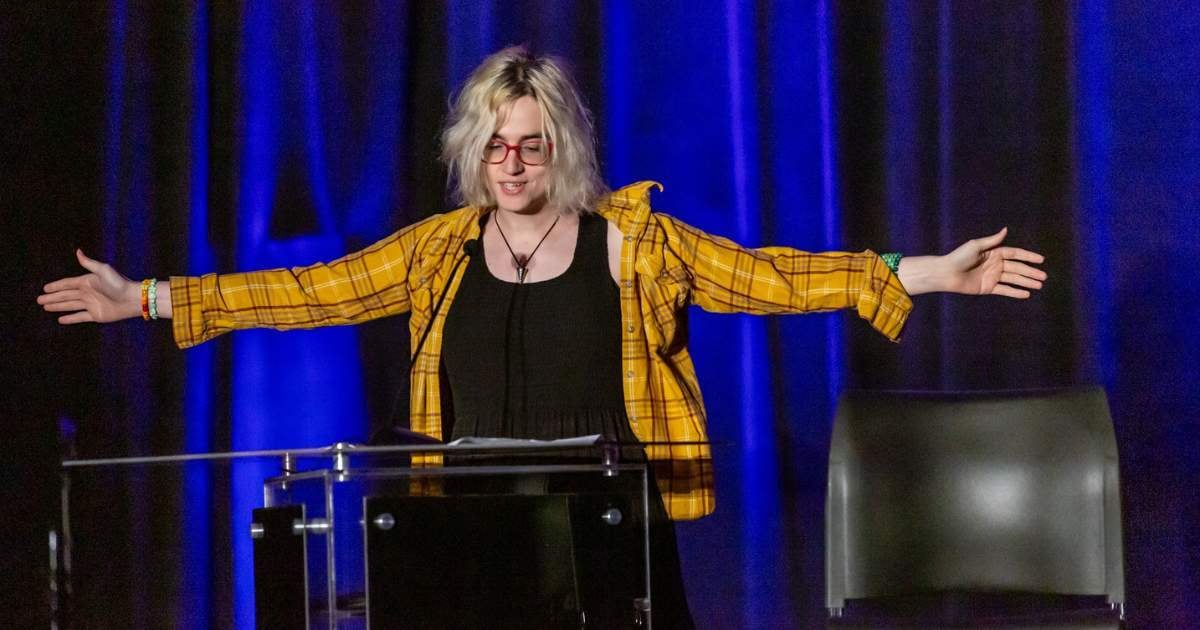
Our guest contributor, Faye Seidler, speaks on what hope means to her as a queer woman and suicide prevention advocate in North Dakota.
I grew up in the Midwest during the early 90s, to homophobic bullying and a time when basically nobody knew what being transgender was. Even in the early 2000s, there weren’t a lot of folks who felt safe being out as gay in North Dakota. And across my childhood, there weren’t any role models or mentors around to ever help me make sense of life.
In short, my youth was something I survived. Today, I look around and see so many youth are surviving theirs too. I see our whole community struggling for so many reasons and finding it hard to wake up tomorrow. And I want to acknowledge all of this before anything else, because building hope requires honesty. And despite everything, despite the challenges of today, I still believe in a better tomorrow.
Not out of forced positive thinking, but born out of studying our history, seeing the joy and community that exists today, and knowing how capable so many queer folks are when they believe in themselves.
Today Isn’t Forever
It wasn’t that long ago that most insurance plans considered all trans care cosmetic and didn’t cover any of it. In North Dakota, in 2010, there was a single provider that prescribed hormones for adults in the entire state. We didn’t start providing medically necessary care for trans youth until 2015, before banning it in 2023.
The anti-queer laws and policies that are being passed today are not written in stone. They are not the end of the conversation. They’re myopic, lack substance, and are fueled by panic and fear. Every effort of the last few years may be reversed.
Despite the hostile national rhetoric, every day more people understand the authenticity of queer identity, the beauty of our expression, and the joy of just existing fully as yourself.
It is still rough out there for so many people, but the chance for a queer youth to grow up in a home where they are loved for who they are has never been higher. And despite as much credit as we rightfully give to social movements and leaders, I personally believe most of the change we see in culture over the last generation has come from kids fighting desperately to get their parents to see past prejudice and choose love. And, each generation, love has been gaining ground and tomorrow keeps having just a little more hope.
Hope Is Something We Create
North Dakota is not exactly an easy place to be a queer person, but it is the place I grew up and the place I promise to spend the rest of my life fighting to make sure youth don’t have to go through what I did.
I’m a suicide prevention advocate because, like most queer people, I’m a multitude of identities and experiences beyond just being part of the queer community. I’ve experienced homelessness, suicidality, bullying, and so many other things that made me not expect to grow up. And I spent so much of my youth and young adult life working as a line cook, playing video games, and dissociating.
With no formal resume and a lot of lived experience, I started volunteering with the local Pride Center. First to be part of the trans support group, then to help lead it, then to create a trans mentor program, and from there, I started providing training to organizations that wanted to learn more about the trans community.
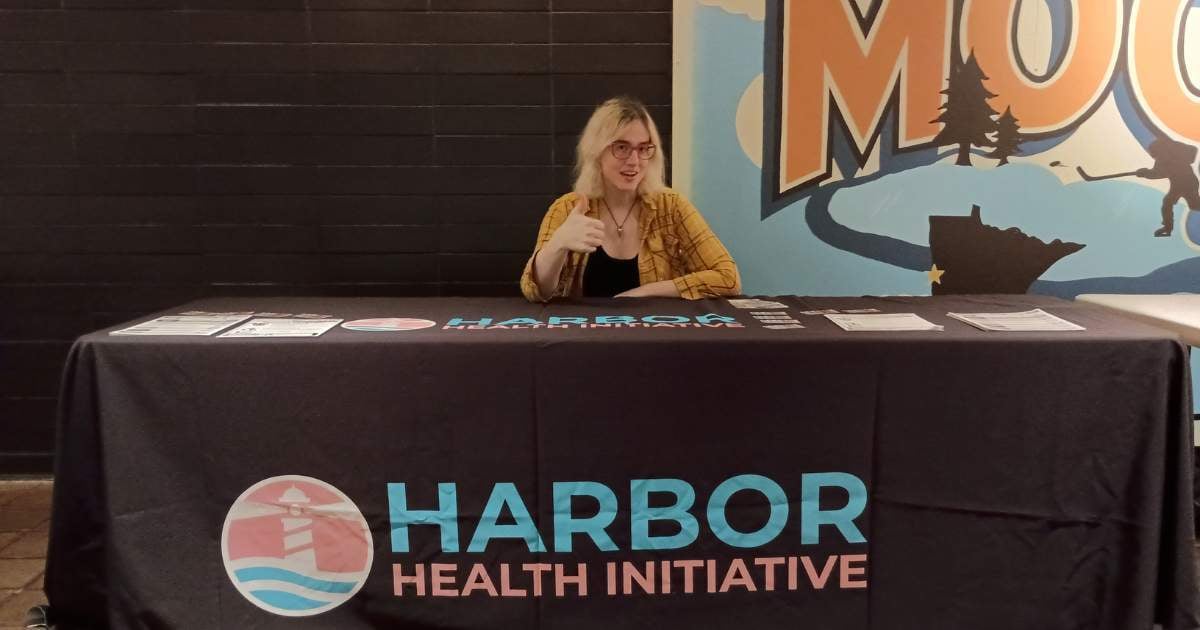
After that, I started to learn everything I could about making change, I got more involved intersectionally, and started to realize that I cared deeply about so many people. Not just trans or queer folks, but all the people who fall through the cracks or who grew up without hope. And ten years later from the day I walked into the local pride center, I’m now an award winning activist, who is well respected across North Dakota.
I think folks from outside of my state would be hard-pressed to believe we even have a queer community, let alone that someone like me could exist here. And my story is not unique, nor am I uniquely special or capable. In little and big ways across every state and community, there are people just like me. People who fight for hope and in that effort create it.
By 2025, North Dakota had Prides across ten different cities in our state. And each one of them was a point of community, of resiliency, and of hope. It was a gathering of folks who wanted to say, no matter what, we want you to feel safe and seen.
Why I Believe in Tomorrow
I’m writing this blog post for Point of Pride, which didn’t exist when I was a kid. It’s an organization that helps trans people directly with transition costs, uplifting support letters, and advocacy. My entire life could have been changed if it existed when I grew up and what’s beautiful to me is that kids are growing up with organizations like Point of Pride existing. That kind of support doesn’t just change individual lives—it changes what feels possible.
We also have Trans Lifeline and Trevor Project to specifically support our community in crisis and countless other orgs at the national and local levels that fight for queer people.
We have countless role models today for queer and trans youth to see themselves in and feel less alone, even if they don’t have much connection in their local communities. Our stories now exist in a way that is accessible to everyone.
In North Dakota, we have Red River Rainbow Seniors, a fantastic group of LGBTQ+ elders that fundraises and donates to LGBTQ+ youth-serving organizations. Our kids can actually look up to elders in our state and envision themselves living long lives. I can’t stress how new this is for our community or how absolutely awe-inspiring it is for anyone growing up before the 2000s.
Today, I get to be a mentor for youth. I now embody a role that didn’t exist for me and that I desperately needed growing up. This is a transformational, tectonic change that I got to witness and be part of in my lifetime. Today, for the first time in modern history, we are intergenerationally connected as a community and culture.
So, do I believe in the future? You betcha.
I know life is still difficult for so many people, for a multitude of reasons, and there aren’t always great answers on the table. So, let me just say that when the world feels too big, try to spend time with your friends and community. When it feels too small, look to queer history and the work so many do today. And finally, be as kind and patient with yourself as you are to the people you care about.
The information on this page is for general education only. It is not medical advice, legal advice, or professional advice. For questions or help with your specific situation, please talk to a licensed doctor, lawyer, or another qualified expert.

Written by Point of Pride
Point of Pride provides financial aid and direct support to trans folks in need of health and wellness care.