What to Say When Someone Misgenders You (+ Self-Care Tips)
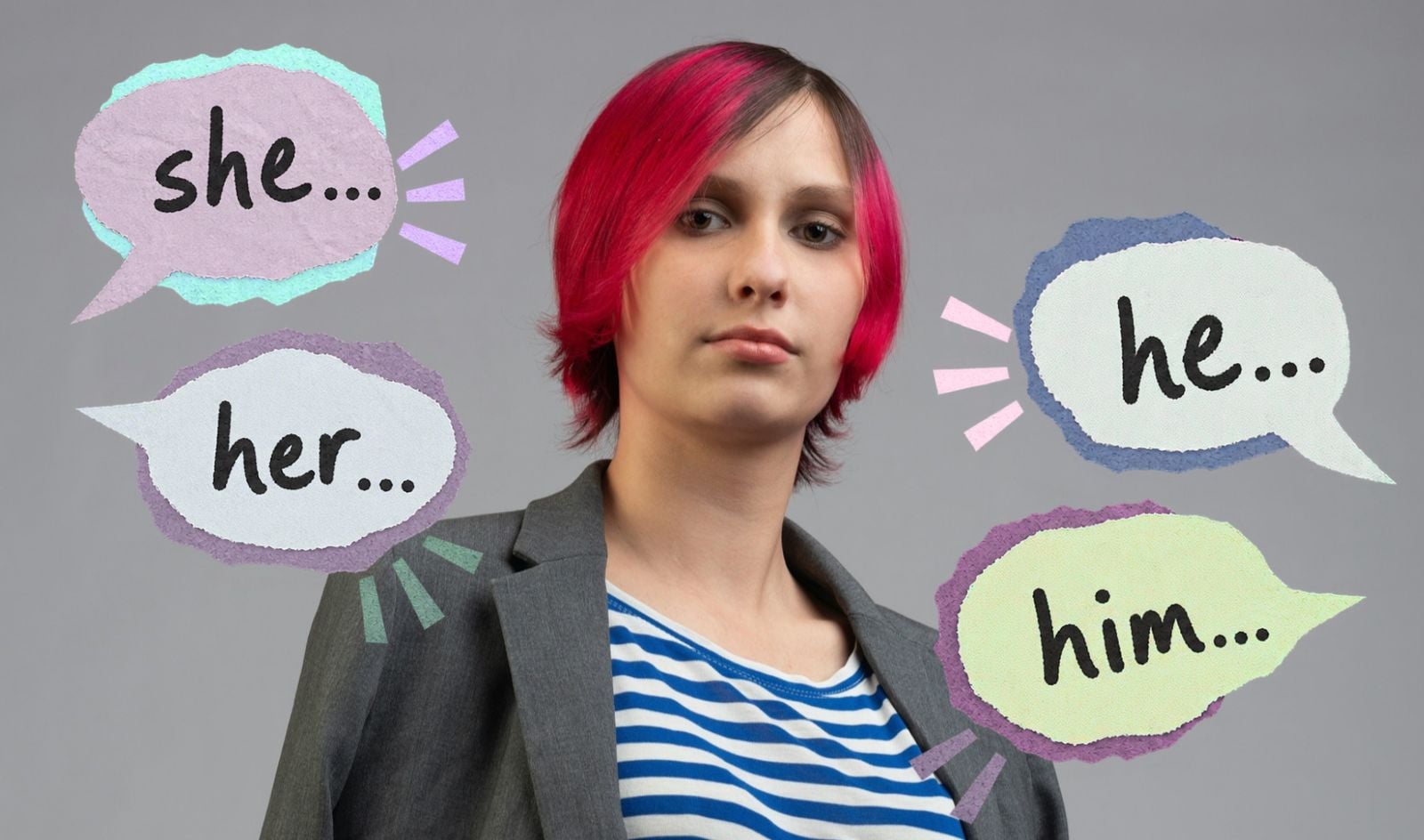
It happens in a split second. A coworker says the wrong pronoun in a meeting. A server says "Thanks, sir." A relative uses your old name at dinner. And suddenly you're doing a lot of math in your head: Do I say something? Is it safe? Do I have the energy for this right now?
Here's the good news: you get to decide. You never owe anyone a correction, and you never owe anyone silence.
This guide gives you ready-to-use phrases for what to say when someone misgenders you, from gentle to firm, across a few everyday situations. Then we'll share some self-care practices for the moments after, because how you take care of yourself matters just as much as what you say.
Before you respond: a 3-second check-in
When someone misgenders you, it can help to pause and ask yourself three quick questions:
- Is it safe? Trust your gut. If correcting someone could put you at risk, it's okay to let it go and take care of yourself first.
- Is it worth my energy right now? Some days you'll want to correct every slip. Other days you'll want to save your energy for things that matter more to you. Both are valid.
- Is this a mistake or a pattern? A one-time slip usually calls for a quick, light fix. Repeated misgendering, especially after you've already corrected someone, may call for a firmer response or a separate conversation.
Once you've checked in with yourself, choose the response that fits. In the templates below, swap in your own name and pronouns wherever you see brackets.
What to say when someone misgenders you: boundary phrases from gentle to firm
Each scenario below has four options. Gentle is a quick, low-key fix that keeps things moving. Clear names the mistake directly. Firm sets a boundary when gentle hasn’t worked. And Spicy is for when humor is your favorite way to set a boundary. It works best with people who’ll get the joke, and when you’re feeling safe and a little sassy.
There’s no “right” option. Pick whatever feels true to you in the moment.
At work or school
Coworkers, managers, teachers, and classmates are people you'll likely see again and again, so a calm, simple correction often goes a long way.
- Gentle: "Just a quick note, it's [they], not [she]." Then keep going with the conversation.
- Gentle (in writing): In an email or chat, reply with your point, then add: "P.S. Just want to make sure you know, my pronouns are [he/him]. Thanks!"
- Clear: "I want to flag that I use [they/them] pronouns. I'd appreciate it if you could use them all the time, including when I'm not in the room."
- Firm: "I've mentioned my pronouns to you a few times now, and it's still happening. Using the right pronouns is part of treating me with respect at work. Can I count on you to get this right going forward?"
- Spicy: "Fun fact: I’m still a [they]. Same as in the last meeting. And the one before that.” Or, in writing: “Great points! Also, plot twist: it’s [he/him]. 😉"
If misgendering keeps happening at work or school, it can help to keep a simple record of dates and what was said. If you feel safe doing so, you can bring it to a trusted manager, HR, or an employee resource group (ERG) at work, or to a school counselor or trusted teacher at school.
With family and friends
Misgendering from people who love you can sting in a special way, especially from those who knew you before you came out. Often the mistakes come from habit, not bad intent. Still, you deserve to be seen.
- Gentle: "[Mom], remember? It's [Sam] now." Say it with a smile, then move on.
- Gentle (with a quick fix): Simply repeat their sentence back with the right word: "Right, [he]'s coming too."
- Clear: "I know this is new and you're still adjusting. That said, it really matters to me when you use [she/her]. It helps me feel like myself around you."
- Firm: "I've asked you a lot of times to use my name and pronouns. When you don't, it hurts, and it makes it hard for me to want to be here. I need you to really try."
- Spicy: "Who’s [old name]? Never heard of 'em. Anyway, [Sam] would love to go to your house for the holidays." Or: "That’s strike two, [Aunt Linda]. I’m keeping score, and I will bring it up at Thanksgiving."
You can also invite your people to practice. Some families and friends find it helpful to talk about you in the third person when you're not around, so the right name and pronouns become second nature. And if someone over-apologizes after a slip, it's okay to keep it light: "Thanks, I appreciate it. Let's keep going."
With strangers and service workers
Baristas, store clerks, customer service reps, and online strangers are often people you'll never see again. That makes this a great place to decide, case by case, whether a correction is worth it to you.
- Gentle: "Oh, it's actually [ma'am], not [sir]. Thanks!"
- Gentle (on the phone): "Quick correction for your notes: my name is [Jordan], and it's [Mx. / Mr. / Ms.] if you need a title."
- Clear: "I'm not a [sir]. You can just call me [Taylor]."
- Firm: "I've corrected that once already. Please use the right name on my account, or I'd like to speak with someone who can update it."
- Spicy: "Sir? Where?" Look around, then a smile and keep going.
Online, you get to decide what's worth your energy. A short "Actually, I'm a woman, and I use [she/her]" is plenty. For repeated or intentional misgendering, the mute, block, and report buttons are all valid boundaries, too.
When it keeps happening
If one person in your life keeps misgendering you, it might be time to move from in-the-moment fixes to a short, private conversation. Here's a simple formula for how you could frame it:
- Name it: "I've noticed you still use [he] for me pretty often."
- Share why it matters: "When that happens, it takes me out of the moment and I don't feel seen."
- Make a clear ask: "Could you practice on your own, or let me know if something's getting in the way?"
Most people who care about you want to get it right, and a calm, direct talk can make a real difference.
If someone is misgendering you on purpose, though, that's no longer a mistake. You don't have to keep educating them. It's okay to step back, limit contact, or bring in someone else to help support.
It's okay to let it go
Not correcting someone is not giving up, and it doesn't make your identity any less real. Sometimes it isn't safe. Sometimes you're tired. Sometimes you'd rather enjoy your coffee than explain pronouns to a stranger. Choosing your battles is a way of protecting your peace, and that's something to be proud of.
Self-care after being misgendered
Even when you handle it beautifully, being misgendered can leave you feeling rattled, frustrated, or drained. We know how repeated misgendering can be exhausting and demoralizing over time. So give yourself credit, and give yourself some care.
In the moment: breathe and ground yourself
A few slow breaths can help your body settle. Try breathing in for a count of four, holding for four, and breathing out for six. Or try a quick grounding exercise: name five things you can see, four you can touch, three you can hear, two you can smell, and one you can taste.
For more guided support, explore Point of Pride's free Meditations for Trans People, which include guided meditations and breathing practices created for and by the trans community. You might choose to save one to your phone so it's ready when you need it.
Afterward: come back to yourself
- Affirm yourself. Say your name and pronouns out loud, or write a short affirmation like "I know who I am." If misgendering has brought up feelings of dysphoria, we recommend you check out our post on self-care when you feel dysphoria.
- Let yourself feel it. It's okay to be annoyed, sad, or angry. Journal, vent to a friend, or take a walk. You don't have to shrug it off right away.
- Do something that feels like you. Put on the outfit that makes you feel most like yourself, play your favorite song, or spend a few minutes on something that brings you joy.
- Lean on your people. Text a friend who always gets it right. Spend time in affirming spaces, online or in person, where you can simply be yourself.
- Build daily habits that refill your cup. Small routines, like daily affirmations and cutting back on harsh self-talk, can make hard moments easier to bounce back from. Find more in 5 self-care tips to start trying today.
Questions we hear often
"Should I always correct someone who misgenders me?"
No. Correcting someone is a choice, not a duty. Think about your safety, your energy, and whether it's a one-time slip or a pattern. Whatever you decide is valid.
"What if someone misgenders me on purpose?"
Intentional misgendering isn't a mistake, and you don't owe that person more patience or education. It's okay to set a firm boundary, walk away, limit contact, or, at work or school, document what happened and bring it to someone you trust.
"What should I say when someone apologizes too much?"
A big apology can put you in the awkward spot of comforting the person who made the mistake. Try something short like "Thanks, I appreciate that," and move the conversation forward.
"How do I correct someone without making it awkward?"
Keep it short, calm, and matter-of-fact: "It's [they], by the way." Then keep talking. The less fuss you make, the more natural it feels for everyone, including you!
You deserve to be seen
Every time you decide how to respond, whether that's a gentle nudge, a firm boundary, or a deep breath and moving on, you're choosing what's best for you. That's something to celebrate!
The information on this page is for general education only. It is not medical advice, legal advice, or professional advice. For questions or help with your specific situation, please talk to a licensed doctor, lawyer, or another qualified expert.

Written by Point of Pride
Point of Pride provides financial aid and direct support to trans folks in need of health and wellness care.